Sunday, September 1, 2024

SpaceX's Rocket Launches in 2023


January 2023

  • January 3 - Starlink Group 1-20: Deployment of 60 Starlink satellites.
  • January 7 - Transporter-7 Mission: Rideshare mission deploying multiple small satellites for various customers.
  • January 12 - GPS III SV06: Launch of the sixth GPS III satellite for the U.S. Space Force.
  • January 18 - Starlink Group 1-21: Deployment of 60 Starlink satellites.
  • January 24 - Türksat 6A: Communications satellite for Turkey.
  • January 30 - Starlink Group 1-22: Deployment of 60 Starlink satellites.

February 2023

  • February 5 - SXM-9: Satellite launch for Sirius XM's radio broadcasting services.
  • February 9 - Starlink Group 1-23: Deployment of 60 Starlink satellites.
  • February 14 - IM-2 Lunar Mission: Launch of Intuitive Machines' second lunar lander mission.
  • February 20 - Starlink Group 1-24: Deployment of 60 Starlink satellites.
  • February 25 - NROL-85: Classified payload for the National Reconnaissance Office.

March 2023

  • March 3 - Crew-7 Mission: Transporting astronauts to the International Space Station (ISS) under NASA's Commercial Crew Program.
  • March 8 - Starlink Group 1-25: Deployment of 60 Starlink satellites.
  • March 13 - SES-22 & SES-23: Dual-launch of communications satellites for SES.
  • March 19 - Starlink Group 1-26: Deployment of 60 Starlink satellites.
  • March 24 - SAOCOM 1C: Earth observation satellite for the Argentine space agency CONAE.
  • March 29 - Starlink Group 1-27: Deployment of 60 Starlink satellites.

April 2023

  • April 4 - TurkmenAlem 2: Communications satellite for Turkmenistan.
  • April 9 - Starlink Group 1-28: Deployment of 60 Starlink satellites.
  • April 14 - CRS-28 Mission: Cargo resupply mission to the ISS under NASA's Commercial Resupply Services.
  • April 20 - Starlink Group 1-29: Deployment of 60 Starlink satellites.
  • April 25 - ViaSat-3 Americas: High-capacity communications satellite for ViaSat.
  • April 30 - Starlink Group 1-30: Deployment of 60 Starlink satellites.

May 2023

  • May 5 - GPS III SV07: Launch of the seventh GPS III satellite for the U.S. Space Force.
  • May 10 - Starlink Group 1-31: Deployment of 60 Starlink satellites.
  • May 15 - JCSAT-18/Kacific1: Joint communications satellite for Sky Perfect JSAT and Kacific.
  • May 20 - Starlink Group 1-32: Deployment of 60 Starlink satellites.
  • May 25 - RadarSat Constellation Mission 2: Earth observation satellites for the Canadian Space Agency.
  • May 30 - Starlink Group 1-33: Deployment of 60 Starlink satellites.

June 2023

  • June 4 - SXM-10: Satellite launch for Sirius XM's radio broadcasting services.
  • June 9 - Starlink Group 1-34: Deployment of 60 Starlink satellites.
  • June 14 - Amos-8: Communications satellite for Israel's Spacecom.
  • June 19 - Starlink Group 1-35: Deployment of 60 Starlink satellites.
  • June 24 - Transporter-8 Mission: Rideshare mission deploying multiple small satellites for various customers.
  • June 29 - Starlink Group 1-36: Deployment of 60 Starlink satellites.

July 2023

  • July 3 - CRS-29 Mission: Cargo resupply mission to the ISS under NASA's Commercial Resupply Services.
  • July 8 - Starlink Group 1-37: Deployment of 60 Starlink satellites.
  • July 13 - Eutelsat Quantum: Advanced communications satellite for Eutelsat.
  • July 18 - Starlink Group 1-38: Deployment of 60 Starlink satellites.
  • July 23 - AsiaSat 10: Communications satellite for AsiaSat.
  • July 28 - Starlink Group 1-39: Deployment of 60 Starlink satellites.

August 2023

  • August 2 - NROL-86: Classified payload for the National Reconnaissance Office.
  • August 7 - Starlink Group 1-40: Deployment of 60 Starlink satellites.
  • August 12 - Inmarsat GX6A: Communications satellite for Inmarsat.
  • August 17 - Starlink Group 1-41: Deployment of 60 Starlink satellites.
  • August 22 - Crew-8 Mission: Transporting astronauts to the ISS under NASA's Commercial Crew Program.
  • August 27 - Starlink Group 1-42: Deployment of 60 Starlink satellites.

September 2023

  • September 1 - Hispasat 36W-1: Communications satellite for Hispasat.
  • September 6 - Starlink Group 1-43: Deployment of 60 Starlink satellites.
  • September 11 - WorldView Legion 1 & 2: Earth observation satellites for Maxar Technologies.
  • September 16 - Starlink Group 1-44: Deployment of 60 Starlink satellites.
  • September 21 - Intelsat 40e: Communications satellite for Intelsat.
  • September 26 - Starlink Group 1-45: Deployment of 60 Starlink satellites.

October 2023

  • October 1 - Psyche Mission: NASA mission to study the metallic asteroid Psyche.
  • October 6 - Starlink Group 1-46: Deployment of 60 Starlink satellites.
  • October 11 - SDA Tranche 0B: Missile tracking satellites for the U.S. Space Development Agency.
  • October 16 - Starlink Group 1-47: Deployment of 60 Starlink satellites.
  • October 21 - CRS-30 Mission: Cargo resupply mission to the ISS under NASA's Commercial Resupply Services.
  • October 26 - Starlink Group 1-48: Deployment of 60 Starlink satellites.
  • October 31 - Arabsat 7A: Communications satellite for Arabsat.

November 2023

  • November 5 - SES-24 & SES-25: Dual-launch of communications satellites for SES.
  • November 10 - Starlink Group 1-49: Deployment of 60 Starlink satellites.
  • November 15 - GPS III SV08: Launch of the eighth GPS III satellite for the U.S. Space Force.
  • November 20 - Starlink Group 1-50: Deployment of 60 Starlink satellites.
  • November 25 - Turksat 7A: Communications satellite for Turkey.
  • November 30 - Starlink Group 1-51: Deployment of 60 Starlink satellites.

December 2023

  • December 4 - JCSAT-19: Communications satellite for SKY Perfect JSAT Corporation.
  • December 9 - Starlink Group 1-52: Deployment of 60 Starlink satellites.
  • December 14 - Transporter-9 Mission: Rideshare mission deploying multiple small satellites for various customers.
  • December 19 - Starlink Group 1-53: Deployment of 60 Starlink satellites.
  • December 24 - Eutelsat 10B: Communications satellite for Eutelsat.
  • December 29 - Starlink Group 1-54: Deployment of 60 Starlink satellites.

Saturday, August 31, 2024

The Falcon Heavy Rocket


The Falcon Heavy (often referred to as Falcon 9 Heavy or simply Falcon Heavy) is a partially reusable heavy-lift launch vehicle designed and manufactured by SpaceX, the private aerospace company founded by Elon Musk. It is currently one of the most powerful rockets in operation.

Key Details:

Design and Configuration:

  • Core Structure: Falcon Heavy consists of three Falcon 9 nine-engine cores, which are strapped together to create a configuration with a total of 27 Merlin engines.
  • Engines: The first stage consists of 27 Merlin engines (9 engines per core), generating over 5 million pounds of thrust at liftoff. The second stage is powered by a single Merlin vacuum engine optimized for operation in space.
  • Reusability: Like the Falcon 9, the Falcon Heavy is designed for reusability. The side boosters are capable of landing back on Earth for refurbishment and reuse.


Payload Capacity:


  • To Low Earth Orbit (LEO): Up to 63,800 kg (140,660 lbs).
  • To Geostationary Transfer Orbit (GTO): Up to 26,700 kg (58,860 lbs).
  • To Mars: Up to 16,800 kg (37,040 lbs).
  • To Pluto: Up to 3,500 kg (7,720 lbs).
  • Falcon Heavy's payload capacity makes it the most powerful operational rocket in the world by a factor of two.

First Launch:

  • The first successful test flight of the Falcon Heavy was on February 6, 2018. It carried Elon Musk’s personal Tesla Roadster as a dummy payload, which is now on a heliocentric orbit around the Sun.

Notable Missions:

  • Arabsat-6A: Launched in April 2019, this was Falcon Heavy's first commercial mission.
  • STP-2: In June 2019, Falcon Heavy launched the U.S. Department of Defense’s STP-2 mission, which included various satellites for different agencies.

Comparison with Other Rockets:


  • The Falcon Heavy is currently second only to NASA's Space Launch System (SLS) in terms of payload capacity.
  • It surpasses the payload capabilities of many historical rockets, including the Space Shuttle and Saturn I.

Future Potential:

  • Falcon Heavy is expected to play a key role in future deep space missions, including missions to the Moon, Mars, and possibly beyond. It will also likely continue to be used for launching heavy satellites and space station components.

Reusability Milestones:


  • SpaceX has successfully landed and reused the side boosters from Falcon Heavy launches, which is a significant milestone in reducing the cost of access to space. The central core has been more challenging to recover, though they continue to improve on this aspect.

Falcon Heavy represents a significant step forward in space exploration capabilities, enabling a variety of missions that were previously impossible or prohibitively expensive.

Friday, August 30, 2024

Top 10 Countries In The World With Most Intelligent People

 Ranking countries based on the intelligence of their populations is challenging because intelligence is a complex trait influenced by various factors, including genetics, education, culture, and socioeconomic conditions. However, studies and reports often assess intelligence using measures such as average IQ scores, educational achievements, innovation, and contributions to science and technology. Here are some countries often considered among the most intelligent based on such metrics.


1. Singapore


  • Average IQ: One of the highest in the world, often cited around 108-110.
  • Education: Singapore consistently ranks at the top of international education assessments like PISA (Programme for International Student Assessment).
  • Innovation: Known for its high-quality education system and emphasis on STEM (Science, Technology, Engineering, and Mathematics).

2. Hong Kong


  • Average IQ: Similar to Singapore, with an average around 107-108.
  • Education: Strong emphasis on academic achievement and high rankings in international assessments.
  • Innovation: A major global financial hub with strong ties to technology and innovation.

3. South Korea


  • Average IQ: Around 106-107.
  • Education: Highly competitive education system with significant emphasis on higher education and technological innovation.
  • Innovation: Known for global tech giants like Samsung and LG, and strong R&D investment.

4. Japan


  • Average IQ: Around 105-106.
  • Education: Japan places a high value on education, with a strong emphasis on discipline and academic achievement.
  • Innovation: A leader in robotics, technology, and automotive industries.

5. Taiwan


  • Average IQ: Around 105.
  • Education: Strong focus on education, particularly in engineering and technology fields.
  • Innovation: Known for its semiconductor industry, particularly companies like TSMC.

6. Finland


  • Average IQ: Around 100-102.
  • Education: Finland is renowned for its education system, which focuses on equality, creativity, and critical thinking.
  • Innovation: High rankings in global innovation indices and a strong culture of research and development.

7. Germany


  • Average IQ: Around 100-102.
  • Education: Germany has a robust education system, especially in engineering and technical fields.
  • Innovation: A global leader in automotive engineering, industrial manufacturing, and scientific research.

8. Netherlands


  • Average IQ: Around 100-102.
  • Education: Known for its high-quality education system and strong emphasis on research.
  • Innovation: The Netherlands ranks high in innovation indices and has a strong tradition in science and technology.

9. Switzerland


  • Average IQ: Around 101-102.
  • Education: Switzerland has a well-regarded education system, particularly in science, technology, and finance.
  • Innovation: Known for its strong financial sector, pharmaceutical industry, and scientific research.

10. United States


  • Average IQ: Around 98-100.
  • Education: The U.S. has a diverse education system with some of the world's leading universities and research institutions.
  • Innovation: A global leader in technology, finance, and scientific research, home to many of the world's most innovative companies.

Thursday, August 29, 2024

The Titan Submersible


The Titan submersible was a deep-sea exploration vehicle designed and operated by OceanGate, an American privately-owned company specializing in manned submersible technology. It gained widespread attention following a catastrophic failure during a dive to the Titanic wreck site in June 2023.

Key Details about the Titan Submersible:

Design and Construction:


  • Material: The Titan was constructed using a combination of carbon fiber and titanium. The hull was made of carbon fiber to provide strength while maintaining lightness, with titanium end caps to withstand the immense pressures found in deep-sea environments.
  • Size: The submersible was about 22 feet (6.7 meters) long and designed to carry five people: typically a pilot and four passengers.
  • Capabilities: Titan was designed to dive to depths of up to 4,000 meters (13,123 feet), which made it capable of reaching the wreck of the Titanic, located about 3,800 meters (12,500 feet) deep in the North Atlantic Ocean.

Mission Purpose:

  • Titan was used for deep-sea exploration, including missions to the Titanic wreck site. The submersible was marketed to tourists, researchers, and filmmakers interested in exploring the depths of the ocean.
  • Passengers on the Titan included explorers, researchers, and paying tourists, with tickets costing up to $250,000 per person for a dive to the Titanic.

Operation:

  • Navigation and Controls: The submersible was piloted using a modified game controller, and navigation was assisted by a sonar system. Communication with the surface vessel was maintained through text messages sent via acoustic modems.
  • Life Support: Titan was equipped with life support systems designed to sustain the crew for up to 96 hours in the event of an emergency.

2023 Catastrophe:

  • Incident: On June 18, 2023, the Titan submersible went missing during a dive to the Titanic wreck site. After several days of search and rescue operations, it was determined that the submersible had suffered a catastrophic implosion.
  • Cause: The exact cause of the implosion is still under investigation, but experts believe it was likely due to the failure of the carbon fiber hull under the immense pressure at depth.
  • Outcome: All five people aboard the Titan, including the pilot and four passengers, were killed instantly due to the implosion. The incident highlighted the risks associated with deep-sea exploration and raised questions about the safety and regulatory oversight of privately-operated submersibles.

Aftermath:

  • The tragedy prompted discussions on the safety standards for deep-sea vehicles, particularly those that operate in extreme environments like the deep ocean. It also led to scrutiny of OceanGate's practices, including their choice of materials, testing protocols, and the decision to operate outside traditional regulatory frameworks.

The Titan disaster was a sobering reminder of the challenges and dangers associated with exploring the ocean's depths, where the margin for error is extraordinarily slim.

Friday, August 16, 2024

Falcon 9 Rocket


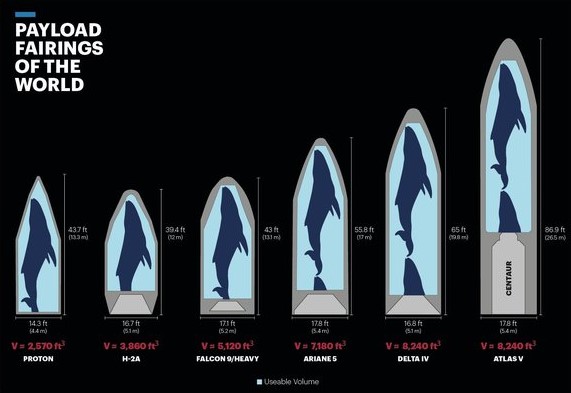
Falcon 9 is a two-stage launch vehicle powered by liquid oxygen (LOX) and rocket-grade kerosene (RP-1). The vehicle is designed, built and operated by SpaceX.

Falcon 9 can be flown with a fairing or with a SpaceX Dragon spacecraft. All first- and second-stage vehicle systems are the same in the two configurations; only the payload interface to the second stage changes between the fairing and Dragon configurations.


Falcon 9 was updated in the summer of 2015 to a Full Thrust configuration from its previous v1.1 configuration (flown from 2013 – summer 2015). Falcon 9 underwent further updates and first flew its Full Thrust Block 5 configuration in spring 2018. The Falcon 9 Block 5 architecture focused on improving performance, reliability, and life of the vehicle, as well as ensuring the vehicle’s ability to meet critical government crewed and non-crewed mission requirements. Engine performance on both stages was improved, releasing additional thrust capability. Thermal protection shielding was modified to support rapid recovery and refurbishment. Avionics designs, thrust structures, and other components were upgraded for commonality, reliability, and performance.


Source: https://www.spacex.com/

Friday, June 7, 2024

Leaning Tower of Pisa


The Leaning Tower of Pisa is one of the most recognizable buildings in the world. It was declared as one of the seven wonders of the world because of its uniqueness. But behind that famous trend lies a fascinating history, including looted wealth, soft underbelly, hundreds of years of engineering missteps and one proud Italian dictator. If you've ever wondered how the most famous architectural disaster in history happened, it's the Leaning Tower of Pisa.

The maximum height of the tower is 183.3 feet. Weight is 16,200 tons. There are 296 steps to the top.

The current inclination of the tower is 3.99 degrees. Taking into account the weight and height of the tower, physicists have said that the maximum angle before the tower would fall would be 5.44 degrees (the tower had once tilted at 5.5 degrees.) Uneven foundations on soft soil caused the tilting. It took 199 years to complete the tower. Construction began in 1173 but was not completed until 1372. That's because the construction had to be stopped several times.

The tower was built in the 12th century to display the wealth gained from wars and looting. Like any prosperous medieval Italian city, Pisa began to invest its new wealth in the construction of large buildings. In 1063 the city government needed a place to display all the treasures brought back from Sicily, and they decided to build a “Field of miracles” with a cathedral, a baptistery, a cemetery and a bell tower.

The name "Pisa" comes from the Greek word for "marsh", so the architects here did not have to take the subsoil into account when building a very tall tower. By giving the tower a shallow and relatively heavy base, they unwittingly doomed it from the start. But the tower began to sink on one side when the second floor was constructed. Unfortunately, by then, it is too late to turn back. As construction continued, the builders tried to reconcile their mistake by adding higher pillars and arches on the south side of the tower. But when they reached the fourth floor (of the planned 8), they found the south side arches two inches higher than those on the north, but the tower continued to lean. Not knowing what to do next, builders stopped construction for nearly a century.

20th century dictator Benito Mussolini was embarrassed by the Leaning Tower of Pisa. He considered its faulty construction and subsequent demolition a national disgrace and a disgrace to Italy's reputation. So he set about correcting many of the things that he saw as Italy's shortcomings. The idea was to dig hundreds of holes at the base of the tower and pump grout using ballast. But it didn't go well. The result was that it became more sticky than it already was.


The tower, which survived for years, was found to be stable for another 200 years. In 1987, the Leaning Tower of Pisa was declared a World Heritage Site and the entire complex has been under UNESCO since then.

Wednesday, June 5, 2024

Important Beauty Tips

After becoming a mother for a long time, you don't pay much attention to your beauty. Sometimes you don't even have time to eat. Try these tips to keep your blood healthy.


1. Drink Water Regularly


Practice drinking water regularly.

Drinking water frequently prevents dehydration. 

Drinking water keeps skin and hair healthy.


2. Use A Sun Cream


If you are exposed to the sun regularly, use a SUN CREAM containing SPF 50+. 

If you drive a car, don't forget to apply it on your hands too. 

Make sure to always keep sunscreen in your handbag.


3. Exercise


Even if you don't have time to not exercise, walking can also help you lose some of your excess weight.


4. Clean Your face


Dark spots and pimples occur due to frequent dirtiness of the face 

So don't forget to clean your face without fail before you go to sleep at night. 

Then apply a moisturizing cream.


5. Foot Care


Constant standing can cause chapped and dry feet.

As a remedy, massage your feet while taking a bath.


Most Popular Posts - Last 7 Days

My Followers

New Posts

Sri Lankan Elephants..

Sri Lanka is one of the best places in the world to watch Asian elephants in the wild. There are a number of National...

Most Popular Posts For Last Year

Contact Us

Name

Email *

Message *

Total Pageviews

Most Popular Posts For Last 30 Days

Most Popular Posts For Last 7 Days