Showing posts with label Space. Show all posts

Friday, July 31, 2026

🌌 The Mystery of the Cosmos: The Inconceivable "WOW!" Signal!


Have you ever wondered if an intelligent civilization from beyond our planet has ever sent us a message?

On August 15, 1977, the 'Big Ear' radio telescope at Ohio State University in the United States captured an unusual and intense signal from deep space. It was an exceptionally powerful, narrow-band signal that lasted for 72 seconds.

It was so powerful that Jerry R. Ehman, a scientist analyzing the data, was amazed when he saw the signal on the computer printout. He grabbed a red pen and circled it on the paper, writing "WOW!" next to it. Ever since that day, it has gone down in history as "The Wow! Signal".

🤔 Why is it so Special?

  1. Not Natural Sounds: Typically, radio waves from space spread across various frequencies. However, this signal came exclusively from one specific, narrow frequency (1420 MHz). Scientists believe this is unlikely to occur completely naturally (this frequency is emitted by hydrogen atoms, which are abundant in the universe, making it a likely choice for extraterrestrial communication).

  2. High Intensity: It was approximately 30 times stronger than the background cosmic radio noise.

  3. Mysterious Origin: The signal originated from the direction of the constellation Sagittarius, near a star group called Chi Sagittarii. However, there were no known stars or planets capable of producing such a powerful signal at that exact location.

🕵️‍♂️ Was it an Extraterrestrial Message?

It remains a mystery to this day.

  • Those who believe "Yes": A few scientists suggest it could have been a transmission sent by intelligent extraterrestrial life.

  • Those who believe "No": Many scientists believe it could have been caused by a natural phenomenon (for example, a sudden emission from a passing comet or another rare astronomical event). However, that theory has not been definitively proven either.

The most unfortunate part is that due to the limited capabilities of the 'Big Ear' telescope at the time, the signal was recorded only once. Although its exact point of origin was pinpointed, scientists repeatedly pointed telescopes back at that location in the years following, but the signal was never heard again.

Therefore, it remains one of the universe's greatest unsolved mysteries.

What do you think? Could this have been a message sent to us by extraterrestrials, or was it merely a natural occurrence? Share your thoughts in the comments below! 👇

Monday, June 29, 2026

A Journey Through Our Cosmic Neighborhood


When you look up at the night sky, it’s easy to see the stars as distant, static points of light. But tucked away in the cozy corner of the Milky Way galaxy lies our Solar System—a dynamic, chaotic, and breathtakingly beautiful dance of planets, moons, and cosmic debris, all choreographed by the gravity of a single, golden star: our Sun.

Pack your bags (and your spacesuit)—we’re going on a quick tour of our cosmic home!


The Master of the House: The Sun

Everything starts here. Containing 99.8% of the entire solar system's mass, the Sun is the ultimate powerhouse. It’s a massive ball of plasma that provides the heat and light necessary for life on Earth. Without its gravitational grip, the planets would simply drift off into the dark, cold void of space.


The Inner Worlds: The Rocky Neighborhood

The four inner planets—Mercury, Venus, Earth, and Mars—are known as the "terrestrial" planets. They are small, dense, and made mostly of rock and metal.

  • Mercury: The speedster. It zips around the Sun in just 88 days.

  • Venus: Our "evil twin." It’s similar in size to Earth but boasts a runaway greenhouse effect, making it the hottest planet in the solar system.

  • Earth: Our blue marble—the only place we know that hosts the miracle of life.

  • Mars: The Red Planet. Home to the solar system's largest volcano and a target for the next great leap in human exploration.


The Giant Realm: Gas and Ice

Cross the asteroid belt, and you enter the kingdom of the giants. These massive worlds are made mostly of hydrogen, helium, and ices.

  • Jupiter: The undisputed king. It’s so big that all the other planets could fit inside it twice. Its Great Red Spot is a storm that has been raging for centuries!

  • Saturn: The jewel of the solar system. Its iconic ring system is a masterclass in cosmic beauty, made of countless chunks of ice and rock.

  • Uranus: The oddball. It rotates on its side, rolling like a ball around the Sun.

  • Neptune: The windy, blue giant. It’s the furthest planet from the Sun, boasting supersonic winds that make Earth’s hurricanes look like a gentle breeze.


More Than Just Planets

Our solar system is crowded! Between the planets, you’ll find:

  • The Asteroid Belt: A rocky wasteland between Mars and Jupiter that holds the history of our solar system's formation.

  • Dwarf Planets: Like Pluto, Eris, and Ceres, these small, icy worlds remind us that there is still so much we don't know about the outer reaches.

  • Comets: The "dirty snowballs" that visit us from the far-flung Oort Cloud, lighting up our skies with beautiful tails whenever they get too close to the Sun.


Why It Matters

Exploring our solar system isn't just about collecting rocks or taking pretty pictures of rings. It’s about understanding our origin. Every element in your body was once forged inside a star or in the swirling clouds of dust that created our sun and planets.

We are not just observing the solar system; we are made of it.


Want to explore further?

The next decade of space exploration is going to be historic, with missions heading to Jupiter’s icy moons and new probes aiming for the edges of our system. Keep your eyes on the stars—the adventure is only just beginning!

What’s your favorite planet, and why? Let us know in the comments below!

Tuesday, December 10, 2024

Starship 6


Launch and Flight Sequence

  1. Propellant Loading:

    • Utilized liquid methane as fuel and liquid oxygen as oxidizer for both Starship and Super Heavy​
      .
    • Fully loaded and chilled before engine ignition.
  2. Liftoff and Ascent:

    • All 33 Raptor engines fired successfully, lifting the largest rocket ever built.
    • Super Heavy executed a throttle-down phase during max Q, the point of maximum aerodynamic stress.
  3. Stage Separation:

    • A hot-staging mechanism was used, where the Starship upper stage ignites its engines before separating from the booster. This approach maximizes efficiency.
  4. In-Space Maneuvers:

    • Achieved an in-space Raptor engine relight, a critical test for deep-space missions.
  5. Reentry and Splashdown:

    • Conducted a controlled reentry with advanced thermal testing of its heat shield.
    • Landed in the Indian Ocean after successful deceleration and landing burns​
      .

Technological Advancements

  1. Heat Shield Improvements:

    • Extensive testing during atmospheric reentry to validate the durability of the tiles under extreme conditions.
  2. Aerodynamic Adjustments:

    • Forward flaps resized and repositioned to optimize stability during reentry and provide improved heat protection​
      .
  3. Engine Development:

    • Raptor engines proved their reliability, from liftoff through in-space reignition. This capability is pivotal for missions requiring mid-flight trajectory adjustments or lunar descent burns​
      .
  4. Reusable Systems Testing:

    • The abort of the Mechazilla tower catch attempt indicated the robustness of SpaceX’s automated safety protocols, redirecting the booster to a planned splashdown​

      .

Future Goals

  1. Reusability Enhancements:

    • Next flight will attempt another ocean landing before moving to tower-based catches, which are central to rapid reusability goals.
  2. Space Exploration Missions:

    • Critical for NASA’s Artemis III mission (2026), where Starship will act as a Human Landing System (HLS) to deliver astronauts to the lunar surface.
    • Demonstrations of cryogenic fuel transfer in orbit are planned to enable longer-duration and deep-space missions​
      .
  3. Mars Ambitions:

    • Elon Musk envisions sending uncrewed Starships to Mars within two years, aiming for a permanent human settlement in the long term​

Sunday, November 10, 2024

The Europa Clipper Mission


The Europa Clipper mission, led by NASA, is designed to explore Jupiter's moon Europa and investigate its potential to support life. The mission, set for launch in 2024, will use a highly advanced spacecraft to study Europa's icy surface and subsurface ocean. Here are some of the mission’s best points:

1. Exploration of Potentially Habitable Environment

  • Europa is one of the most promising places in the solar system for finding extraterrestrial life. Beneath its icy crust, there’s strong evidence of a subsurface ocean. By studying this environment, Europa Clipper aims to determine whether conditions are suitable for life.

2. Sophisticated Scientific Instruments

  • Europa Clipper carries nine specialized instruments to study Europa’s ice shell, subsurface ocean, composition, and activity:
    • Radar to probe the thickness of the ice and map subsurface layers.
    • Thermal Imager to detect warm areas on Europa’s surface, possibly indicating subsurface water.
    • Mass Spectrometer to analyze the composition of gases and particles in Europa's thin atmosphere, which could provide insights into the ocean’s contents.
    • Magnetometer to investigate the moon's magnetic field, which can provide indirect evidence of the ocean's depth and salinity.

3. Multiple Flybys for Close Observation

  • Instead of orbiting Europa, the spacecraft will orbit Jupiter and perform nearly 50 close flybys of Europa, allowing for high-resolution imaging and detailed analysis while minimizing exposure to Jupiter's intense radiation belts.

4. Understanding Ice-Water Interaction and Plumes

  • Recent observations suggest that plumes of water vapor might be erupting from Europa’s surface. Clipper aims to fly through these plumes if they are active, analyzing the water and potential organic materials within, providing crucial information about the ocean below.

5. Mapping Surface and Subsurface Composition

  • By studying Europa’s surface, Clipper will analyze the composition of ice and salts. This data could help identify chemicals that originate from the ocean and reveal the possibility of complex chemistry, which is essential for life.

6. Investigating Geological Activity and Surface Dynamics

  • Clipper will assess the geological history of Europa by examining features like ridges, fractures, and possible subduction zones, which are similar to tectonic processes on Earth. Understanding these features will shed light on how the ice and water interact, which is key to understanding Europa's potential to host life.

7. Advancing Technology for Future Missions

  • Europa Clipper will test and validate technologies for operating in harsh environments, which could be used in future missions to icy moons and ocean worlds, advancing the exploration of habitable environments across the solar system.

8. Impact on Planetary Science and Astrobiology

  • The mission will expand our understanding of ocean worlds, a category that could include several moons in our solar system. Europa Clipper’s findings will set the stage for future missions aimed at detecting signs of life on Europa and other similar moons.

The Europa Clipper mission is highly anticipated, not just for its potential discoveries but for the new ground it breaks in planetary science, astrobiology, and exploration technology.

Thursday, October 31, 2024

Starship’s Fifth Flight Test


Starship’s fifth flight test on October 13, 2024, was a significant development for SpaceX’s mission to create a fully reusable spacecraft system capable of interplanetary travel. Here’s a detailed breakdown of the launch events and the mission outcomes:

1. Launch and Super Heavy Booster Separation


  • Countdown and Lift-off: The Super Heavy booster, with 33 Raptor engines, lifted Starship from SpaceX's Starbase in Boca Chica, Texas. The engines fired at T-3 seconds, propelling the Starship toward its test trajectory. SpaceX ensured careful propellant management and engine chilling to mitigate rapid temperature changes during ignition​

    .
  • Booster Cutoff and Hot-staging Separation: After about two and a half minutes, the booster’s engines cut off at 35 kilometers altitude. The hot-staging method, in which Starship's engines ignite as the booster detaches, reduces the need for complex mechanical separation systems and maximizes efficiency​

    .

2. Super Heavy Booster Catch Attempt


  • Boost-back Burn and Landing: Following stage separation, the Super Heavy booster performed a boost-back burn to position itself above the launch site for recovery. Approximately six minutes after liftoff, the “Mechazilla” catch arms on the launch tower, reminiscent of giant chopsticks, successfully captured the booster as it descended, marking the first successful attempt to catch and secure the booster mid-air instead of a landing​

    .
  • Mechazilla Catch System Impact: This innovative catch system is designed to reduce the impact forces experienced by the booster, enabling quicker inspection and preparation for reuse compared to a traditional landing​

3. Starship’s Flight Path and Reentry


  • Space Mission and Heat Tile Data Collection: Starship proceeded to space, traveling westward over the Indian Ocean. During reentry, the heat tiles on Starship’s underbelly experienced high temperatures, which tested the integrity and performance of its thermal protection system. Certain tiles, particularly around the flaps, showed minor damage, providing data critical for future redesigns and improvements​

    .
  • Controlled Descent and Belly-flop Maneuver: At approximately 50 km altitude, Starship transitioned to a “belly-first” attitude. This position increases atmospheric drag, slowing down the descent. The final stage involved reigniting the Raptors to control speed and trajectory during the water landing, demonstrating the vehicle’s agility and control during high-stress descent phases​

    .

4. Water Landing and Splashdown Analysis


  • Final Descent and Controlled Landing: The flight lasted around 65 minutes, ending with a splashdown in the Indian Ocean. The Starship tipped over post-landing and detonated as planned, with sensors and nearby recording buoys capturing the event for analysis. This step was crucial in evaluating Starship's capability for safe controlled landing scenarios, essential for future missions​

5. Technical and Program Implications

  • Data Collection for Heat Shield and Aerodynamic Performance: Starship carried specially designed heat shield tiles for enhanced data collection. These results will aid in improving tile durability and placement for future orbital missions.

  • Future Prospects for Reusability: With the booster catch success, SpaceX is closer to achieving its goal of a fully reusable launch system, making it possible to envision regular, high-frequency launches to orbit, the Moon, and Mars. SpaceX is preparing for further tests to verify in-space refueling and long-duration flight stability​

The successful catch and recovery of the Super Heavy booster and the extensive data collected on heat shield performance represent major milestones toward SpaceX’s goal of rapid, reusable, and economical spaceflight. With this mission, SpaceX is refining technologies essential for its ambitious goals in space exploration, bringing human Mars missions one step closer.

Saturday, September 7, 2024

Rocket Crashes


1. Types of Rocket Crashes

  • Launch Failures: These happen when a rocket fails to achieve the necessary speed or trajectory to reach space. Launch failures are some of the most common types of rocket crashes.
  • In-Orbit Failures: Sometimes, rockets succeed in launching but encounter problems during their mission, like satellite deployment failures or the failure of specific stages.
  • Re-entry Failures: Spacecraft returning to Earth or attempting to land can experience uncontrolled re-entry, leading to a crash.

2. Notable Rocket Crashes

a) Challenger Disaster (1986)

  • Rocket: NASA Space Shuttle Challenger (STS-51-L)
  • Date: January 28, 1986
  • Cause: The failure of an O-ring in the right solid rocket booster caused a breach, allowing pressurized burning gas to escape and damage the external fuel tank. This led to the disintegration of the shuttle 73 seconds after liftoff.
  • Result: All seven astronauts aboard were killed. This led to a two-and-a-half-year hiatus in NASA’s shuttle program.

b) SpaceX Falcon 9 Failure (2015)

  • Rocket: Falcon 9 (CRS-7)
  • Date: June 28, 2015
  • Cause: A failure of a strut holding a helium tank caused the rocket’s second stage to disintegrate.
  • Result: The loss of the rocket and Dragon spacecraft intended to resupply the International Space Station. It was a setback for SpaceX, though they quickly rebounded with improvements in design.

c) N1 Rocket Failures (1969-1972)

  • Rocket: Soviet N1 Rocket
  • Context: The N1 was the Soviet Union’s attempt to build a super-heavy rocket for lunar missions. It failed four times between 1969 and 1972.
  • Cause: Design flaws, engine failures, and poor systems integration.
  • Result: The Soviet moon program was eventually canceled due to repeated failures.

d) Columbia Disaster (2003)

  • Rocket: NASA Space Shuttle Columbia (STS-107)
  • Date: February 1, 2003
  • Cause: A piece of insulating foam from the external tank damaged the shuttle’s left wing during launch. During re-entry, the heat shield failed, causing the shuttle to disintegrate.
  • Result: All seven crew members were killed. This disaster led to major reforms in NASA’s approach to shuttle safety and ultimately contributed to the retirement of the shuttle program.

e) Proton-M Rocket Failures

  • Rocket: Russian Proton-M
  • Examples:
    • July 2, 2013: A Proton-M rocket crashed seconds after launch due to a failure in the first-stage guidance system. The rocket carried three GLONASS satellites.
    • May 16, 2015: Another Proton-M failed while attempting to launch the MexSat-1 communications satellite, attributed to a third-stage malfunction.

3. Common Causes of Rocket Crashes

  • Structural Failures: Rockets are subjected to extreme stress, and weak points in structural components can lead to failure.
  • Engine Malfunctions: Rocket engines are among the most complex components, and a single failure can cause a crash.
  • Guidance and Control Issues: Rockets need precise guidance systems to maintain trajectory. Malfunctions in these systems can cause them to veer off course.
  • Fuel System Failures: Leaks, ruptures, or insufficient pressure in fuel tanks can result in catastrophic failures.
  • External Factors: Weather conditions, such as high winds or lightning, can affect rocket launches and lead to failure.

4. Consequences of Rocket Crashes

  • Loss of Life: As seen in the Challenger and Columbia disasters, crewed missions carry significant risk to human life.
  • Financial Losses: Rockets and their payloads can cost hundreds of millions of dollars, and each failure results in significant financial losses.
  • Delays in Space Programs: Crashes often result in the postponement of future missions while investigations are conducted and safety protocols are updated.
  • Impact on Public Perception: High-profile failures can shake public confidence in space programs and affect funding and support for future missions.

5. Lessons Learned and Safety Improvements

  • Stricter Safety Protocols: Each failure provides insights that lead to more stringent testing and safety measures.
  • Redundant Systems: Modern rockets are designed with backup systems that can take over in case of a failure.
  • Technological Innovation: Each crash pushes innovation in rocket technology, from more reliable engines to better materials and improved guidance systems.
  • Autonomous Abort Systems: SpaceX's Crew Dragon, for example, is equipped with an autonomous abort system that can safely pull astronauts away from a failing rocket.

6. Recent and Ongoing Crashes

While crash rates have decreased, they still happen. For example:

  • Rocket Lab’s Electron Rocket Failure (2021): A mission carrying commercial satellites failed to reach orbit due to a second-stage engine failure.
  • SpaceX Starship Explosions (2020-2021): Several of SpaceX's Starship prototypes exploded during test landings. These unmanned tests were part of the iterative development of the spacecraft.

7. How Crashes Impact the Space Industry

  • Risk of Private Ventures: Companies like SpaceX, Blue Origin, and Rocket Lab have shown resilience, with failures often leading to improvements.
  • International Collaborations: Countries now collaborate more frequently in response to rocket failures to share expertise and improve success rates.

Tuesday, September 3, 2024

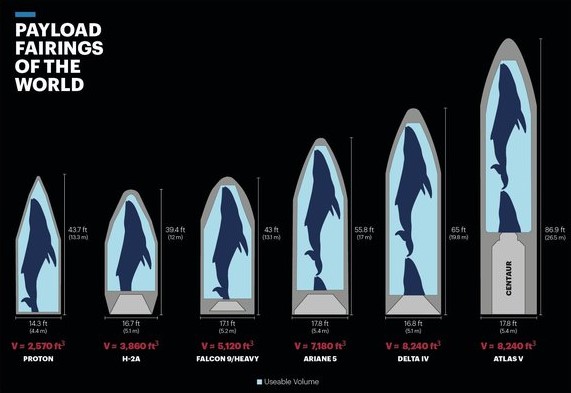
Rocket Categorization According To Their Sizes


Rockets come in a wide range of sizes, each designed for specific purposes, from launching small payloads into space to sending humans to the Moon or even beyond. Here's a detailed report on rockets categorized by their size:

1. Small Rockets

Small rockets are typically used for educational purposes, hobbyist projects, and launching small payloads. They can also serve as suborbital research vehicles.

  • Examples:
    • Sounding Rockets: These are suborbital rockets used for scientific experiments in the upper atmosphere. They are generally around 12–20 meters in length and can reach altitudes between 50 to 1,500 kilometers.
      • Example: Black Brant IX, Terrier-Orion.
    • CubeSat Launchers: These rockets are designed to launch small CubeSats (satellite class with a standard size of 10 cm³) into low Earth orbit (LEO).
      • Example: Rocket Lab's Electron (17 meters in length).

2. Medium Rockets

Medium-sized rockets are often used for launching satellites into geostationary orbit (GEO) or for human spaceflight missions to low Earth orbit.

  • Examples:
    • Falcon 1: Developed by SpaceX, this small-lift launch vehicle was the first privately developed liquid-fueled rocket to reach orbit. It stands at 21 meters in height.
    • Vega: A European Space Agency rocket, Vega is used for launching small payloads into polar orbit. It stands at 30 meters in height.
    • Soyuz: A workhorse of spaceflight, this Russian rocket is used to launch crewed missions and cargo to the International Space Station (ISS). It stands at about 46 meters tall.

3. Heavy-Lift Rockets

Heavy-lift rockets are designed to carry larger payloads, such as satellites, space station modules, and deep-space probes, to a variety of orbits.

  • Examples:
    • Falcon 9: SpaceX's partially reusable rocket, standing at 70 meters, is used for a wide range of missions, including launching satellites to GEO and delivering cargo to the ISS.
    • Ariane 5: This European rocket, standing at 50 meters, is used to launch large payloads into GEO and low Earth orbit.
    • Delta IV Heavy: One of the most powerful rockets, this ULA rocket stands at 72 meters and is used for heavy payloads, including national security missions and deep-space probes.

4. Super Heavy-Lift Rockets

These are the giants of the rocket world, designed for the most demanding missions, including sending humans to the Moon, Mars, or deep space.

  • Examples:
    • Saturn V: The iconic NASA rocket used for the Apollo missions, Saturn V stood at 110.6 meters and could lift over 140 metric tons to low Earth orbit.
    • Space Launch System (SLS): NASA's next-generation rocket, designed to send humans to the Moon and Mars, is expected to stand at 98 meters (Block 1 configuration) with a lifting capacity of 95 metric tons to LEO.
    • Starship: SpaceX's fully reusable rocket, still under development, is designed for missions to Mars. When stacked with its Super Heavy booster, it will stand at 120 meters tall.

5. Microrockets

Microrockets are designed for launching very small payloads or for use in highly specialized applications.

  • Examples:
    • SS-520: A Japanese solid-fueled microrocket, the SS-520 stands at just 9.54 meters tall and is one of the smallest rockets to reach orbit.

6. Model Rockets

Model rockets are small-scale rockets typically used for educational and hobbyist purposes. They are not capable of reaching orbit and are usually less than 1 meter tall.

  • Examples:
    • Estes Rockets: A popular brand among hobbyists, with models ranging from 30 cm to about 1 meter in height.

Sunday, September 1, 2024

SpaceX's Rocket Launches in 2023


January 2023

  • January 3 - Starlink Group 1-20: Deployment of 60 Starlink satellites.
  • January 7 - Transporter-7 Mission: Rideshare mission deploying multiple small satellites for various customers.
  • January 12 - GPS III SV06: Launch of the sixth GPS III satellite for the U.S. Space Force.
  • January 18 - Starlink Group 1-21: Deployment of 60 Starlink satellites.
  • January 24 - Türksat 6A: Communications satellite for Turkey.
  • January 30 - Starlink Group 1-22: Deployment of 60 Starlink satellites.

February 2023

  • February 5 - SXM-9: Satellite launch for Sirius XM's radio broadcasting services.
  • February 9 - Starlink Group 1-23: Deployment of 60 Starlink satellites.
  • February 14 - IM-2 Lunar Mission: Launch of Intuitive Machines' second lunar lander mission.
  • February 20 - Starlink Group 1-24: Deployment of 60 Starlink satellites.
  • February 25 - NROL-85: Classified payload for the National Reconnaissance Office.

March 2023

  • March 3 - Crew-7 Mission: Transporting astronauts to the International Space Station (ISS) under NASA's Commercial Crew Program.
  • March 8 - Starlink Group 1-25: Deployment of 60 Starlink satellites.
  • March 13 - SES-22 & SES-23: Dual-launch of communications satellites for SES.
  • March 19 - Starlink Group 1-26: Deployment of 60 Starlink satellites.
  • March 24 - SAOCOM 1C: Earth observation satellite for the Argentine space agency CONAE.
  • March 29 - Starlink Group 1-27: Deployment of 60 Starlink satellites.

April 2023

  • April 4 - TurkmenAlem 2: Communications satellite for Turkmenistan.
  • April 9 - Starlink Group 1-28: Deployment of 60 Starlink satellites.
  • April 14 - CRS-28 Mission: Cargo resupply mission to the ISS under NASA's Commercial Resupply Services.
  • April 20 - Starlink Group 1-29: Deployment of 60 Starlink satellites.
  • April 25 - ViaSat-3 Americas: High-capacity communications satellite for ViaSat.
  • April 30 - Starlink Group 1-30: Deployment of 60 Starlink satellites.

May 2023

  • May 5 - GPS III SV07: Launch of the seventh GPS III satellite for the U.S. Space Force.
  • May 10 - Starlink Group 1-31: Deployment of 60 Starlink satellites.
  • May 15 - JCSAT-18/Kacific1: Joint communications satellite for Sky Perfect JSAT and Kacific.
  • May 20 - Starlink Group 1-32: Deployment of 60 Starlink satellites.
  • May 25 - RadarSat Constellation Mission 2: Earth observation satellites for the Canadian Space Agency.
  • May 30 - Starlink Group 1-33: Deployment of 60 Starlink satellites.

June 2023

  • June 4 - SXM-10: Satellite launch for Sirius XM's radio broadcasting services.
  • June 9 - Starlink Group 1-34: Deployment of 60 Starlink satellites.
  • June 14 - Amos-8: Communications satellite for Israel's Spacecom.
  • June 19 - Starlink Group 1-35: Deployment of 60 Starlink satellites.
  • June 24 - Transporter-8 Mission: Rideshare mission deploying multiple small satellites for various customers.
  • June 29 - Starlink Group 1-36: Deployment of 60 Starlink satellites.

July 2023

  • July 3 - CRS-29 Mission: Cargo resupply mission to the ISS under NASA's Commercial Resupply Services.
  • July 8 - Starlink Group 1-37: Deployment of 60 Starlink satellites.
  • July 13 - Eutelsat Quantum: Advanced communications satellite for Eutelsat.
  • July 18 - Starlink Group 1-38: Deployment of 60 Starlink satellites.
  • July 23 - AsiaSat 10: Communications satellite for AsiaSat.
  • July 28 - Starlink Group 1-39: Deployment of 60 Starlink satellites.

August 2023

  • August 2 - NROL-86: Classified payload for the National Reconnaissance Office.
  • August 7 - Starlink Group 1-40: Deployment of 60 Starlink satellites.
  • August 12 - Inmarsat GX6A: Communications satellite for Inmarsat.
  • August 17 - Starlink Group 1-41: Deployment of 60 Starlink satellites.
  • August 22 - Crew-8 Mission: Transporting astronauts to the ISS under NASA's Commercial Crew Program.
  • August 27 - Starlink Group 1-42: Deployment of 60 Starlink satellites.

September 2023

  • September 1 - Hispasat 36W-1: Communications satellite for Hispasat.
  • September 6 - Starlink Group 1-43: Deployment of 60 Starlink satellites.
  • September 11 - WorldView Legion 1 & 2: Earth observation satellites for Maxar Technologies.
  • September 16 - Starlink Group 1-44: Deployment of 60 Starlink satellites.
  • September 21 - Intelsat 40e: Communications satellite for Intelsat.
  • September 26 - Starlink Group 1-45: Deployment of 60 Starlink satellites.

October 2023

  • October 1 - Psyche Mission: NASA mission to study the metallic asteroid Psyche.
  • October 6 - Starlink Group 1-46: Deployment of 60 Starlink satellites.
  • October 11 - SDA Tranche 0B: Missile tracking satellites for the U.S. Space Development Agency.
  • October 16 - Starlink Group 1-47: Deployment of 60 Starlink satellites.
  • October 21 - CRS-30 Mission: Cargo resupply mission to the ISS under NASA's Commercial Resupply Services.
  • October 26 - Starlink Group 1-48: Deployment of 60 Starlink satellites.
  • October 31 - Arabsat 7A: Communications satellite for Arabsat.

November 2023

  • November 5 - SES-24 & SES-25: Dual-launch of communications satellites for SES.
  • November 10 - Starlink Group 1-49: Deployment of 60 Starlink satellites.
  • November 15 - GPS III SV08: Launch of the eighth GPS III satellite for the U.S. Space Force.
  • November 20 - Starlink Group 1-50: Deployment of 60 Starlink satellites.
  • November 25 - Turksat 7A: Communications satellite for Turkey.
  • November 30 - Starlink Group 1-51: Deployment of 60 Starlink satellites.

December 2023

  • December 4 - JCSAT-19: Communications satellite for SKY Perfect JSAT Corporation.
  • December 9 - Starlink Group 1-52: Deployment of 60 Starlink satellites.
  • December 14 - Transporter-9 Mission: Rideshare mission deploying multiple small satellites for various customers.
  • December 19 - Starlink Group 1-53: Deployment of 60 Starlink satellites.
  • December 24 - Eutelsat 10B: Communications satellite for Eutelsat.
  • December 29 - Starlink Group 1-54: Deployment of 60 Starlink satellites.

Saturday, August 31, 2024

The Falcon Heavy Rocket


The Falcon Heavy (often referred to as Falcon 9 Heavy or simply Falcon Heavy) is a partially reusable heavy-lift launch vehicle designed and manufactured by SpaceX, the private aerospace company founded by Elon Musk. It is currently one of the most powerful rockets in operation.

Key Details:

Design and Configuration:

  • Core Structure: Falcon Heavy consists of three Falcon 9 nine-engine cores, which are strapped together to create a configuration with a total of 27 Merlin engines.
  • Engines: The first stage consists of 27 Merlin engines (9 engines per core), generating over 5 million pounds of thrust at liftoff. The second stage is powered by a single Merlin vacuum engine optimized for operation in space.
  • Reusability: Like the Falcon 9, the Falcon Heavy is designed for reusability. The side boosters are capable of landing back on Earth for refurbishment and reuse.


Payload Capacity:


  • To Low Earth Orbit (LEO): Up to 63,800 kg (140,660 lbs).
  • To Geostationary Transfer Orbit (GTO): Up to 26,700 kg (58,860 lbs).
  • To Mars: Up to 16,800 kg (37,040 lbs).
  • To Pluto: Up to 3,500 kg (7,720 lbs).
  • Falcon Heavy's payload capacity makes it the most powerful operational rocket in the world by a factor of two.

First Launch:

  • The first successful test flight of the Falcon Heavy was on February 6, 2018. It carried Elon Musk’s personal Tesla Roadster as a dummy payload, which is now on a heliocentric orbit around the Sun.

Notable Missions:

  • Arabsat-6A: Launched in April 2019, this was Falcon Heavy's first commercial mission.
  • STP-2: In June 2019, Falcon Heavy launched the U.S. Department of Defense’s STP-2 mission, which included various satellites for different agencies.

Comparison with Other Rockets:


  • The Falcon Heavy is currently second only to NASA's Space Launch System (SLS) in terms of payload capacity.
  • It surpasses the payload capabilities of many historical rockets, including the Space Shuttle and Saturn I.

Future Potential:

  • Falcon Heavy is expected to play a key role in future deep space missions, including missions to the Moon, Mars, and possibly beyond. It will also likely continue to be used for launching heavy satellites and space station components.

Reusability Milestones:


  • SpaceX has successfully landed and reused the side boosters from Falcon Heavy launches, which is a significant milestone in reducing the cost of access to space. The central core has been more challenging to recover, though they continue to improve on this aspect.

Falcon Heavy represents a significant step forward in space exploration capabilities, enabling a variety of missions that were previously impossible or prohibitively expensive.

Friday, August 16, 2024

Falcon 9 Rocket


Falcon 9 is a two-stage launch vehicle powered by liquid oxygen (LOX) and rocket-grade kerosene (RP-1). The vehicle is designed, built and operated by SpaceX.

Falcon 9 can be flown with a fairing or with a SpaceX Dragon spacecraft. All first- and second-stage vehicle systems are the same in the two configurations; only the payload interface to the second stage changes between the fairing and Dragon configurations.


Falcon 9 was updated in the summer of 2015 to a Full Thrust configuration from its previous v1.1 configuration (flown from 2013 – summer 2015). Falcon 9 underwent further updates and first flew its Full Thrust Block 5 configuration in spring 2018. The Falcon 9 Block 5 architecture focused on improving performance, reliability, and life of the vehicle, as well as ensuring the vehicle’s ability to meet critical government crewed and non-crewed mission requirements. Engine performance on both stages was improved, releasing additional thrust capability. Thermal protection shielding was modified to support rapid recovery and refurbishment. Avionics designs, thrust structures, and other components were upgraded for commonality, reliability, and performance.


Source: https://www.spacex.com/

Tuesday, January 2, 2024

Space X - Starship


Height: 121m / 397ft

Diameter: 9m / 29.5ft

Payload Capacity: 100-150tons

 SpaceX’s Starship spacecraft and Super Heavy rocket – collectively referred to as Starship – represent a fully reusable transportation system designed to carry both crew and cargo to Earth orbit, the Moon, Mars and beyond. Starship is the world’s most powerful launch vehicle ever developed, capable of carrying up to 150 metric tonnes fully reusable and 250 metric tonnes expendable.


 STARSHIP


 Height: 50m / 165ft

Diameter: 9m / 29.5ft

Propellant Capacity 1200tons / 2.6Mlb

Thrust: 1500tf / 3.3Mlb

Payload capacity: 100-150tons

Starship is the fully reusable spacecraft and second stage of the Starship system. The vehicle comes in several different configurations, offers an integrated payload section and is capable of carrying crew and cargo to Earth orbit, the Moon, Mars and beyond. Starship is also capable of point-to-point transport on Earth, enabling travel to anywhere in the world in one hour or less.


 SUPER HEAVY BOOSTER


HEIGHT: 71 m / 232 ft

DIAMETER: 9 m / 29.5 ft

PROPELLANT CAPACITY: 3,400 t / 7.5 Mlb

THRUST: 7,590 tf / 16.7 Mlbf


Super Heavy is the first stage, or booster, of the Starship launch system. Powered by 33 Raptor engines using sub-cooled liquid methane (CH4) and liquid oxygen (LOX), Super Heavy is fully reusable and will re-enter Earth’s atmosphere to land back at the launch site.


RAPTOR ENGINES


DIAMETER: 1.3 m / 4.2 ft

HEIGHT: 3.1 m / 10.2 ft

THRUST: 230 tf / 507 klbf

The Raptor engine is a reusable methane-oxygen staged-combustion engine that powers the Starship system and has twice the thrust of the Falcon 9 Merlin engine. Starship will be powered by six engines, three Raptor engines, and three Raptor Vacuum (RVac) engines, which are designed for use in the vacuum of space. Super Heavy will be powered by 33 Raptor engines, with 13 in the center and the remaining 20 around the perimeter of the booster’s aft end.


 Source: https://www.spacex.com/


Most Popular Posts - Last 7 Days

My Followers

New Posts

Sri Lankan Elephants..

Sri Lanka is one of the best places in the world to watch Asian elephants in the wild. There are a number of National...

Most Popular Posts For Last Year

Contact Us

Name

Email *

Message *

Total Pageviews

Most Popular Posts For Last 30 Days

Most Popular Posts For Last 7 Days